
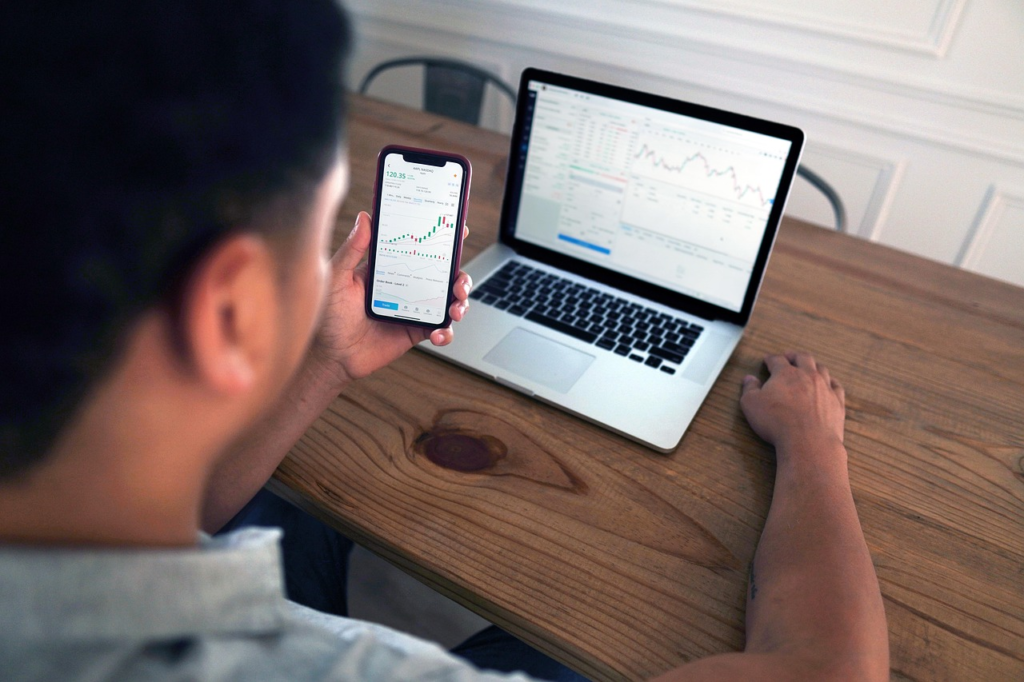
Institutional trading exists on an enormous scale that significantly differs from general retail market
activities. The distinct resources alongside advanced execution methods and strategic practices
operated by large financial institutions form an economic environment which shapes price movements
beyond what individual investors can achieve. With access to advanced technology, deep market
liquidity, and expert personnel, they can execute financial trades with enhanced precision than retail
traders achieve.
Proprietary data, along with advanced algorithms, are exclusive advantages that institutions use, unlike
the public data and basic technical indicators relied upon by retail investors. Research-driven entities
devote substantial funds to develop complex quantitative systems which identify decisions through data
analysis. Real-time analysis of substantial data sources by institutions allows them to spot profitable
opportunities earlier than the rest of the marketplace. Such institutional-grade resource access enables
them to use high-frequency trading strategies for exploiting minimal price differences.
Capital allocation stands as a fundamental difference between the two trading groups. Numerous
traders execute big orders from their sizable accounts, which enables smooth block trades without
significant market price fluctuations. These traders route their commands between multiple trading
venues to minimize execution price variations. Because they work with restricted investment funds,
retail traders experience increased sensitivity to market shifts along with reduced liquidity. Their
approaches involve small positions because of limited capital; thus, they implement stop-loss techniques
to protect their investments.
Institutional trading fully depends on risk management for its successful operations. Risk assessment
models operated by firms evaluate both macroeconomic and geopolitical events in addition to other risk
factors. Organizations mitigate position risks through derivative instruments to control their market
exposure at specified levels. Retail trading participants face limitations when it comes to acquiring
similar hedging capabilities that institutional traders utilize. The majority of retail traders use portfolio
diversification together with position sizing methods to manage risk rather than alternative methods.
Trade executions function differently between retail traders and institutions. Their direct market access
helps them execute orders without intermediaries, so they get reduced transaction fees together with
speedy order fulfillment. The execution of orders by retail traders depends on broker mediation that
may involve market-making activities, leading to delayed and higher-priced trades. The way orders are
executed produces dissimilarities in profitability because minor performance weaknesses tend to build
up over extended periods.
Market influence serves as a primary factor in which institutions excel over other market players. The
massive market assets provide institutions with the power to direct asset prices and establish trends
that impact retail traders across the board. Major financial players who participate in FX trading exercise
control over price fluctuations by conducting planned strategies supported by large-volume deals.
Market operations of retail traders remain limited compared to institutions, leading retail traders to be
more responsive than forward-thinking in the market.
Retail traders create profitable opportunities even though they face differences compared to
institutional investors. Modern technological developments have enabled private investors to use
complex analysis tools and automated trading capabilities together with continuous news delivery
services. Retail traders successfully adapted to institutional resource differences through the
implementation of quick market inefficiency-based strategies.
The financial market depends on institutions and retail traders in separate ways to achieve both liquid
markets and efficient price discovery. Large institutions utilize their extensive resources for executing
major investment strategies, but retail traders introduce market agility through diversity. FX trading
exists within an evolving system which shows institutional trends defining market directions, but retail
traders discover their own path to operate within these directions.