
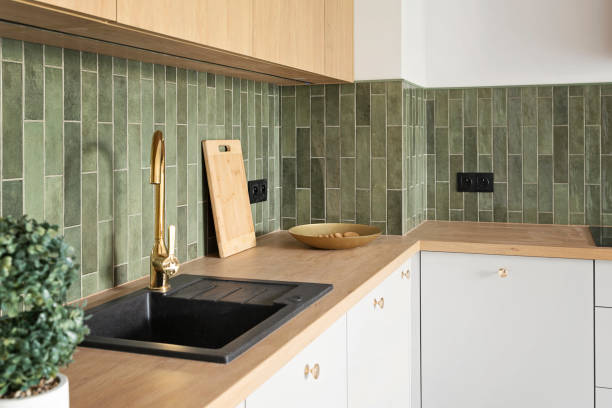
A high price does not automatically create a luxury kitchen. It can buy expensive materials, large appliances, and premium finishes, but that alone does not guarantee a better space. Many kitchens look impressive at first and still feel inconvenient after a few weeks of use. That gap is what is changing how people define luxury today.
The focus has shifted from visible cost to overall performance. A kitchen now needs to work smoothly, stay organised, and feel consistent over time. When those elements are missing, even a costly space can feel average.
Layout That Supports Real Use
In many modern luxury kitchens, layout decisions are made early and tested against routine tasks. Where food is prepared, where items are stored, and how cleaning is handled all influence the final arrangement. When this is done properly, the kitchen feels easier to use without needing constant adjustment.
Storage That Keeps Surfaces Clear
Storage plays a larger role than most people expect. A kitchen can have high-end finishes and still feel cluttered if storage is not planned well. Visible items quickly break the sense of order. Luxury kitchens today focus on keeping surfaces clear without making storage difficult to access. This often includes deep drawers, concealed compartments, and integrated appliance storage. Instead of adding more cabinets, the emphasis is on placing storage where it is most useful.
Materials That Handle Daily Use
Worktops, cabinetry, and flooring are expected to handle regular use without showing damage quickly. Natural stone, durable wood, and matte finishes are becoming more common because they tend to age better. Small marks or variations are accepted as part of the material rather than treated as flaws.
This approach makes luxury kitchens feel more stable. The space does not lose its appeal after a short period, and maintenance becomes easier to manage.
Lighting That Adapts to the Space
Lighting is now treated as part of the design rather than a final addition. A single overhead light is no longer enough. Kitchens are being planned with multiple layers of lighting that support different tasks.
Task lighting improves visibility during food preparation. Ambient lighting softens the space in the evening. Concealed lighting adds depth without drawing attention to itself. These layers allow the kitchen to adjust throughout the day.
Integration Instead of Display
Appliances and technology are still important, but they are no longer meant to dominate the space. Large visible units and complex control panels can interrupt the overall look of a kitchen.
Modern luxury kitchens aim to integrate appliances so they blend into the design. Panels, built-in systems, and simplified controls are used to keep the space visually calm. Technology supports the kitchen without becoming the focus of it.
This creates a more balanced environment where attention is not pulled in too many directions.
Consistency Across the Whole Space
A luxury kitchen is not defined by a single feature. It is defined by how well everything works together. Proportions, materials, storage, lighting, and layout need to feel connected. When one part is out of place, the overall quality is affected.
Consistency is often what separates a good kitchen from a refined one. It shows in small details such as aligned surfaces, balanced spacing, and smooth transitions between elements. These are not always obvious at first, but they become clear with regular use.
A More Practical Definition of Luxury
The definition of luxury has become more practical. It is no longer focused on showing value through size or cost alone. It is focused on reducing effort, improving function, and maintaining quality over time.
This is why luxury kitchens today often appear simpler than older designs. The complexity has not disappeared. It has been resolved behind the scenes.
A kitchen that works smoothly, stays organised, and holds its quality is more likely to feel luxurious than one built around visual impact alone. That is the standard more homeowners are aiming for.